Monocytes is a single-use, closed-circuit kit that enables the collection of a concentrate of mononuclear cells (TNC) from peripheral blood in a fast, reproducible manner, without the need for centrifugation.
This approach minimizes cellular stress, reduces the risk of contamination, and makes the procedure simple and safe.
It is currently the only system on the market that, through simple gravity-based filtration, isolates mononuclear cells in a single step, excluding red blood cells and pro-inflammatory granulocytes.
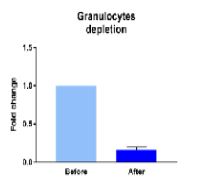
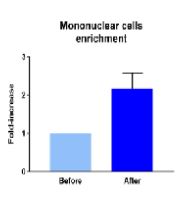
From 60–120 ml of blood, it yields a concentrate with approximately three times the initial mononuclear cells and a ~2/3 reduction in pro-inflammatory components.
Monocytes is currently the only system on the market that makes it possible to recover mononuclear cells and growth factors by simple drop-filtration, excluding pro-inflammatory white blood cells. This method involves only one application. It is a surgical and non-ambulatory procedure.
The anti-inflammatory and pain-relieving effect is immediate and compared to corticosteroid treatments has a reparative and non-degenerative effect on the treated tissues.
Monocytes are large white blood cells that play an essential role in the regenerative process of tendon, ligament, and muscle injuries, as well as in the treatment of intra-articular inflammatory conditions.
They are known for their ability to ingest and destroy pathogenic microorganisms, foreign particles, and cellular debris, initiating a specific immune response.
Once they reach the tissues, monocytes mature and transform into macrophages, which support the formation and regulation of new blood vessels.
Both monocytes and macrophages release hormones and cytokines capable of modulating local inflammation and triggering tissue regeneration.
The Monocytes system is the only one on the market to have obtained both Italian and European patents as a closed-circuit system with a tubular filter.
The Lipocell patent was developed to offer a “gentle” wash of the adipose tissue, preserving its structure while maintaining both its mechanical properties and filling capacity. This innovative technique prevents tissue fragmentation, preserving all the potential of mesenchymal cells.
The Lipocell patent preserves both the vasculo-stromal niches and the entire extracellular matrix, which are as crucial as the mesenchymal cells themselves. The Lipocell procedure ensures superior visco-modulating and filling effects without losing the tissue structure.
Monocytes can eliminate pathogens and cellular debris, contributing to a cleaner healing environment. These cells secrete cytokines and chemokines that promote the proliferation of mesenchymal cells and neoangiogenesis, essential processes for tissue healing.
Monocytes play an important role in regulating inflammation, facilitating the transition from an acute inflammatory phase to a repair phase.


They promote bone remodeling by differentiating into osteoclasts. They can release the BMP-2 growth factor specific for bone regeneration.
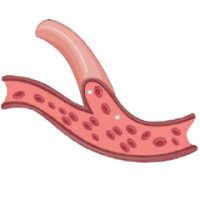
They improve angiogenesis and arteriogenesis by promoting the branching and diameter enlargement of vessels and capillaries, enhancing the flow of oxygen, nutrients, and cellular precursors.

They improve the homeostatic balance of the joints through macrophage activity, recycling oxidized elements of the synovial fluid, such as hyaluronic acid and lubricin.
Its action profile is anti-inflammatory, analgesic, and pro-regenerative and, unlike corticosteroids, it is not associated with degeneration of the treated tissues.
The monocytes contained in the concentrate contribute to cleansing the lesion site and modulating inflammation, thereby supporting the regeneration of damaged tissues.
Moreover, this technique integrates easily into therapeutic pathways, including when combined with other interventions.
Musculoskeletal disorders: tendinopathies, tendon and ligament injuries, symptomatic treatment of inflammatory joint diseases (arthritis) and cartilage lesions, including in association with hyaluronic acid.
Spine surgery: early-stage lumbar and cervical disc disease and stenosis, low back pain and neck pain.
Colon-proctology: Crohn’s disease.
Andrology: erectile dysfunction.
Management of difficult wounds: diabetic foot, ischemic limb, ulcers and pressure sores, promoting tissue regeneration processes.
Aesthetic medicine: used to stimulate the regeneration of tissues damaged or deteriorated by aging. Can be used in association with hyaluronic acid or autologous adipose tissue.
Plastic surgery: scars and in association with plastic surgery to accelerate wound and scar healing. Used for deep tissue regeneration.
Trichology: indicated for the initial treatment of androgenetic alopecia and post-transplant to promote graft take.
Mononuclear cells are obtained from a peripheral blood draw of 60-120 cc. Thanks to the specific gravity-based filtration system, it is possible to recover these cellular components while eliminating red blood cells and pro-inflammatory granulocytes.
The resulting cell concentrate contains three times the number of initial cells (the goal is often to increase the concentration of the desired TNC cells) and a reduction of two-thirds of pro-inflammatory granulocytes (the goal is to select or purify the sample to reduce the content of cells that could promote inflammation).
Monocytes thus play a fundamental role in cleaning the lesion site and reducing inflammation, thereby allowing the regeneration of damaged tissues.
The brochure provides a comprehensive overview of the advanced technical features and innovative solutions integrated into the product.
Below you can download the document in PDF format.
No. It always starts with a blood draw (in the case of Monocytes, almost double the amount compared to PRP), but it concentrates and isolates different molecules. In PRP, the platelet-rich plasma is obtained, while with Monocytes, the mononuclear cells are isolated.
They are different devices. For some conditions, both can be used, with the limitation that PRP requires repeated administrations, while Monocytes is a one-shot treatment. Additionally, Monocytes is applicable in chronic conditions.
No. It is a one-shot method for orthopedic conditions, and repeated administrations are used in vascular/wound care.
It is a one-shot cell therapy, costs as much as 3 PRP injections, and is performed only once.
The literature is vast in the vascular field, as monocytes have been used for years with excellent results. Interest and use in the orthopedic field are growing, and the collection of clinical cases and literature is ongoing.
Obviously, it depends on the pathology, the degree of chronicity, and the patient’s history. The surgeon assesses when to proceed with a second treatment, if necessary.
For about a year. There is an immediate result on pain and inflammation, but medium- and long-term results are even more pronounced and noticeable to the patient.